
Views: 0 Author: Site Editor Publish Time: 2026-03-26 Origin: Site
Implementation of National Standards and New Global Market Trends
In March 2026, China's vacuum packaging machine industry reached a significant milestone: two national standards governing automated vacuum packaging equipment officially came into effect this month. Concurrently, both domestic and international markets continue to signal positive momentum: the global market for food vacuum packaging equipment is steadily expanding, trade shows in key domestic production hubs are opening in rapid succession, and a continuous stream of technological innovations is emerging. Against the backdrop of intensifying international trade competition, China's vacuum packaging machine industry is accelerating its integration into the global food packaging supply chain, driven by advancements in standardization and technological breakthroughs.
National Standards Officially Implemented: The Industry Enters a New Phase of Standardized DevelopmentOn March 1, 2026, two national standards in the field of packaging machinery—approved and issued by the State Administration for Market Regulation and the Standardization Administration of China—officially came into effect. This milestone marks China's vacuum packaging equipment industry's entry into a higher level of standardized development.
These two standards are:
GB/T 46076-2025: *General Technical Requirements for Automatic Vacuum Skin Packaging Machines*
GB/T 46077-2025: *General Technical Requirements for Automatic Blister Packaging and Cartoning Integrated Machines*Both standards fall under the jurisdiction of the National Technical
Committee for Standardization of Packaging Machinery. Officially released on August 29, 2025, they have been fully implemented starting this month, following a six-month transitional period.
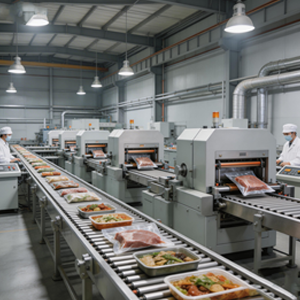
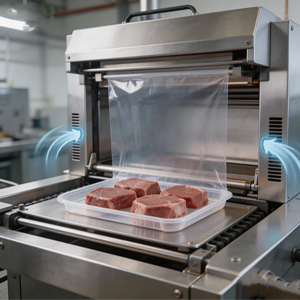
The introduction of *General Technical Requirements for Automatic Vacuum Skin Packaging Machines* is particularly noteworthy. Vacuum skin packaging technology is widely utilized in the high-end food packaging sector—including fresh meat, seafood, and ready-to-eat meals—where it creates a "second skin" protective effect by evacuating air and tightly adhering the film to the product's surface. This standard establishes clear specifications regarding equipment technical parameters, safety performance, and testing methods; it provides domestic equipment manufacturers with a unified set of technical guidelines while serving as an authoritative basis for quality certification in international trade.
Industry insiders point out that the implementation of these national standards will effectively regulate market competition, driving the industry's transition from low-price competition toward quality-based competition. For export-oriented enterprises, products that comply with these national standards will command greater credibility in the international market, thereby helping to overcome technical barriers imposed by certain developed nations.
Global Market Continues to Expand, with the Asia-Pacific Region Leading Growth
According to the latest *Food Vacuum Packaging Machine Market Report: 2026–2034* published by market research firm Fortune Business Insights, the global market for food vacuum packaging machines reached a size of US$16.01 billion in 2025. It is projected to grow to US$16.78 billion in 2026 and is expected to surpass US$25.3 billion by 2034, demonstrating a Compound Annual Growth Rate (CAGR) of 5.30% over the forecast period.
In terms of regional landscape, North America remains the largest global market, holding a 37.10% market share in 2025 with a total market value of US$5.94 billion. Driven by a highly developed food retail network and a strong emphasis on food safety among consumers, the U.S. market is projected to reach a size of $4.76 billion by 2026. A rigorous regulatory environment is a defining characteristic of the North American market; specifically, the U.S. Food and Drug Administration (FDA) mandates that all packaging materials coming into direct contact with food must undergo safety certification, a requirement that compels equipment manufacturers to continuously refine their product designs.
The European market follows closely behind, with Germany, the United Kingdom, and Italy serving as the primary contributors; by 2026, their respective market sizes are projected to reach $840 million, $550 million, and $350 million. The European Union’s Regulation (EC) No 1935/2004 imposes strict safety standards on food packaging materials, thereby compelling equipment manufacturers to constantly elevate their technological benchmarks.
Meanwhile, the Asia-Pacific region has emerged as the growth engine of the global market, boasting the fastest rate of expansion. By 2025, the Asia-Pacific market is expected to reach a size of $5.35 billion, with China projected to lead the region with a market value of $2.28 billion; India’s market is also anticipated to reach $750 million by 2026. China’s massive food processing industry, its continuously expanding market for ready-to-eat meals, and its rapidly growing network of retail chains collectively fuel the robust demand for vacuum packaging equipment. According to data from the China Packaging Federation, the domestic market for vacuum packaging equipment surpassed 8.5 billion RMB in 2025, recording a compound annual growth rate (CAGR) of 9.3%.
Outlook: interpack 2026 Set to Open—Global Attention Centers on Düsseldorf
From May 7 to 13, 2026, interpack 2026—the global packaging industry's most influential trade fair—will take place in Düsseldorf, Germany. It serves as the premier platform for packaging machinery enterprises worldwide to showcase their latest technologies and expand into international markets.
The Busch Group (Germany) has announced that it will present its latest vacuum solutions for the food and pharmaceutical industries at interpack 2026. Located at Booth D05 in Hall 5, Busch will showcase innovative products such as its DOLPHIN liquid ring vacuum pumps and R5 rotary vane vacuum pumps.
The DOLPHIN liquid ring vacuum pump is particularly well-suited for complex operating conditions in food processing environments—situations that may involve moisture, steam, or product residues. It boasts exceptional durability and ease of maintenance, and thanks to its water recirculation system, it consumes very little fresh water. The R5 rotary vane vacuum pump, conversely, is renowned for its compact design, high reliability, and variable-speed control capabilities; it can flexibly adjust pumping speeds to meet actual operational demands, thereby significantly reducing energy consumption.
The Busch Group is one of the world's largest manufacturers of vacuum pumps, employing over 8,000 people across subsidiaries in 47 countries and generating an annual turnover of 2 billion euros. Its participation in the exhibition is expected to attract widespread attention from food processing enterprises worldwide, while also providing international buyers with valuable insights into cutting-edge technologies.
For Chinese manufacturers of vacuum packaging equipment, interpack 2026 represents both an international stage to demonstrate their capabilities and a crucial opportunity to learn about advanced technologies and gauge industry trends. As Chinese-made equipment continues to advance in terms of stability, intelligence, and sustainability, we can anticipate seeing an even greater presence of "Intelligent Manufacturing in China" at this year's exhibition.
Conclusion
March 2026 marks a pivotal juncture for China's vacuum packaging machinery industry—a moment that bridges the past and paves the way for the future. The official implementation of national standards has established a regulatory bedrock for the industry's development; specialized trade fairs held in locations such as Ruian and Beijing have showcased the sector's latest achievements; innovative patents—such as those for self-healing vacuum bag structures—underscore the technological ambition of these enterprises; and the continued expansion of international markets offers vast opportunities for export-oriented companies. Looking ahead to the full year, driven by the staging of international exhibitions such as interpack 2026 and the sustained growth in global demand for food packaging, China's vacuum packaging machine industry is poised to take even more solid strides along the path of standardization, digitalization, and eco-friendly development. For enterprises engaged in international trade, staying at the forefront of technology, cultivating regional markets, and enhancing service capabilities will be the keys to securing a competitive edge in 2026.

Address
Jinan,Shandong

Telephone
+86-15098986094


