
Views: 0 Author: Site Editor Publish Time: 2025-12-29 Origin: Site
A worldwide universal challenge: How to balance food waste VS package waste
There are two adverse situations that the world faces: food waste and packaging waste. These two major problems are vital to economic, environmental, and social challenges. You may have already seen so many debates and discussions on the topic, but It’s never too much to talk about it. The US Environmental Protection Agency reports that, in the United States, food waste is estimated at between 30-40 percent of the food supply, while plastic and other packaging waste makes up around 30 percent of total U.S. waste annually, about 26.8 million tons of plastic sent to landfills in 2017.
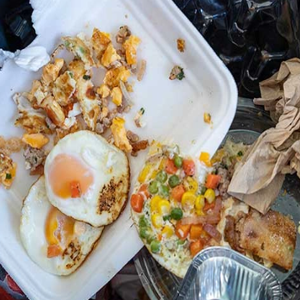
Food waste
More than 30% of the world’s total food produced globally is wasted, worth $1 trillion, and weighs 1.3 billion tonnes. The number is astonishing. According to Alessandro Demaio, CEO of Norway-based EAT, with less than 1/4 of the wasted food, all the hungry people in the world can be fed on. The food waste problem is everywhere throughout the process of food life: From food production to processing, transportation, retail, and end-consumer. Some of the waste is unavoidable, but most of the waste can be prevented.
What’s worse: the wasted food causes a waste of 25% of all water used every year for agricultural purposes.
Package waste
Package waste mainly includes plastic waste and paper waste. Many products are over-packaged by too much paper without necessity. However, paper is easy to recycle, it’s not a real problem to environment.
On the contrast, plastic doesn’t degrade easily, which makes it absolutely harmful to the environment. Plastic waste has been a hot topic globally, its management has become a key focus. Plastic waste has been targeted because the enormous quantity production of disposable plastic products overwhelms the world’s ability to deal with their disposal. Currently the single-use plastic packages account for 40% of plastics produced every year and many of them — such as plastic bags, food wrappers, and food packaging — are actually used for minutes or hours only, but they remain in the environment for hundreds of years before degrade.
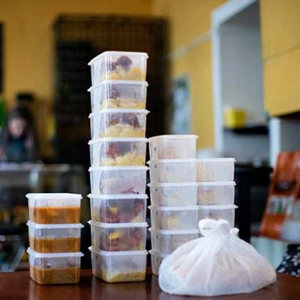
Good food packaging solutions to help minimize food waste.
Food waste happens throughout the whole process of food production, transportation, storage, processing, and cooking. Food packaging plays a major role in minimizing losses during transportation and storage.
The most effective way of protecting food and reducing packaging is to use new food packaging technologies, such as active packaging, barrier films, and nanotechnology.
1. Active packaging, such as modified atmosphere packaging (MAP), can effectively prevent fresh produce losses. The right packaging, coupled with correct storage temperatures, can extend a product’s shelf life by creating conditions in the packaging that delay maturation and ageing of food products, including meat products, aquatic products, fruits and vegetables, dairy products, etc.
2. Barrier films contain small amounts of barrier materials or coatings (PA, PVDC, EVOH, PET, etc) to protect against oxygen and/or moisture, and thus prolong the food’s shelf life while minimizing the amount of packaging. However, sometimes barrier layers prevent the multilayer film from being recyclable. So only use them when needed. On the other hand, a low-barrier film may result in food spoilage sooner and losses.
1. Nanotechnology has recently emerged in food packaging to help extend shelf life. You can enhance a package’s barrier properties by using nanoparticles such as clay, which when mixed with polymer matrix improves the gas barrier. Other nanotech examples are silver nanoparticles that can improve the anti-microbial properties, or nanosensors added to smart packaging as a tracking device for food safety. Using these technologies, you can prevent or minimize food waste without negatively affecting recyclability.
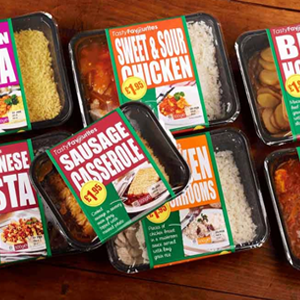
Proper package design also matters
Proper package design can also help minimize food waste. Good packaging design can make it easy to handle throughout the supply chain or to convenience through other packaging performance characteristics.
A package should be easy to handle and replenish without mechanical damage, which could lead to food waste. Other package designs — like easy opening, complete dispensing, and reclosability — can also help reduce food spillage and waste.
The package size should be optimized depending on the market and consumer choices, to extend food shelf life and minimize package waste. For example, a lot of food could get wasted in small households if they buy large packages and are unable to finish the product before it goes bad. However, buying too many single-serve packs may lead to more packaging waste than is necessary.
You could conduct a life-cycle analysis that measures the amount of food waste for two different packaging systems (based on size) of the same product, to determine the effect of the packaging size. For example, packaging for sliced cheese has a much higher global warming potential than the packaging for a block of cheese, but the food waste was significantly higher for the block compared with the sliced product.
Communicating the function of packagings — such as information about food freshness, safety, and standardized date labeling — can also affect food waste. This helps in inventory control and monitoring the shelf life of food products. Today, most food packaging machines can easily do this by integrating with a printer.
Finding the right balance
In most debates, people always focus on the direct environmental impact of packaging waste but neglect their indirect influence on food waste. When designing packaging for a food product, we should evaluate the environmental impact of both food waste and packaging waste to assess the overall consequence.
In addition, you can reduce package waste by: preventing over-packaging; using smart packaging; reducing the packaging weight; choosing recycled packaging materials; and improving on the collection and recycling of empty packaging.
A few changes in packaging design may have a great impact on preventing food waste and package waste. It’s a fine balance of protecting food adequately and using packaging materials optimally. We must do both to save resources, reduce environmental impact, and increase overall system efficiency.
For food, use short and local food supply chains, and efficient packaging technologies / meterials, such as vacuum packaging, modified atmosphere packaging, and VSP vacuum skin packaging. For packaging, eco-designing, reusing, and better recycling can be complementary strategies for developing a circular economy.

Address
Jinan,Shandong

Telephone
+86-15098986094


